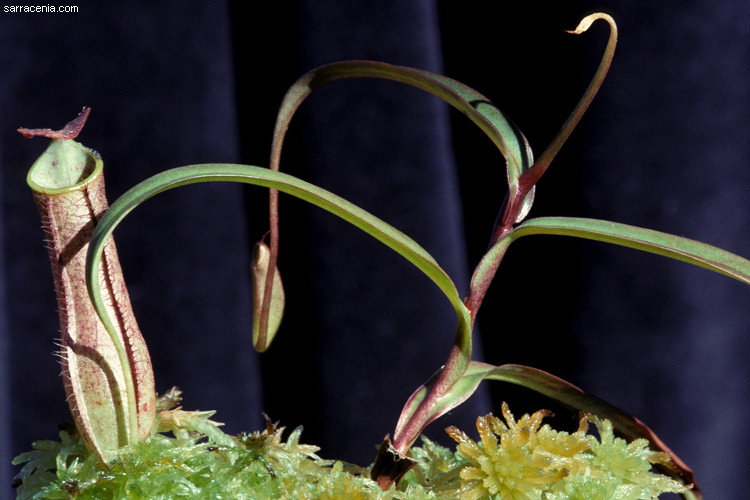
Nepenthes gracilis
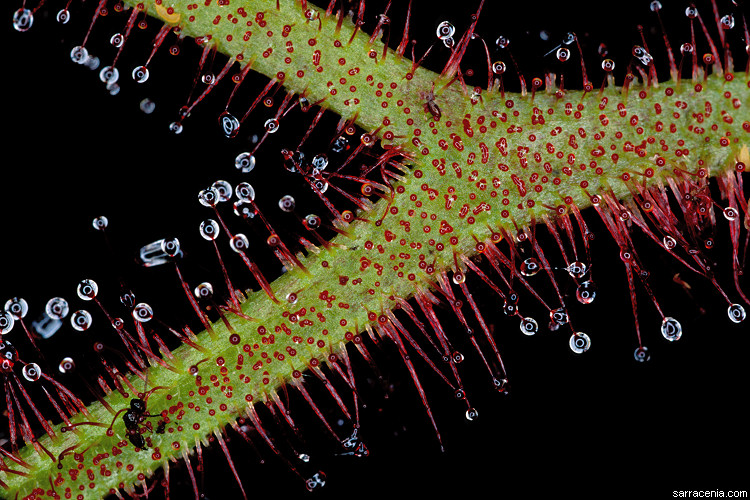
Drosera binata
Kinds of Carnivorous Plants
This section of the FAQ is dedicated to taxonomy (botanical classification).
The first few pages discuss background, general information. After that I
describe aspects of
each genus of carnivorous and "para-carnivorous" plants. I even throw in some
information about non-carnivorous plants that folks ask me about because of
tenuous or perceived connections to carnivorous plants.
I warn you right now, O Gentle FAQ Reader...the geekness factor of the FAQ gets stratospherically high in this
part of the FAQ, especially
where I start talking about the individual species. The joke factor is low, the fact density is high. Strap yourself in,
you're going for a ride!
- Kinds of carnivorous plants
- These Latin names are pretty nerdy. Why don't you use common names?
- So why do Latin names have two parts?
- What do you mean by complex names like Drosera binata var. multifida f. extrema?
- How do you pronounce the Latin names?
- How did carnivorous plants evolve?
- What up with kingdom, order, and class designations for carnivorous plants?
- What are the evolutionary clades for carnivorous plants?
- How many carnivorous plant species are there?
- Do you want to tell me about a species I missed?
- Aldrovanda
- Brocchinia
- Byblis
- Catopsis
- Cephalotus
- Darlingtonia
- Dionaea
- Drosera
- I: Introduction to the sundews
- II: African and Madagascan species
- III: Latin Americans
- IV: Pygmies
- V: The "petiolaris-complex"
- VI: Tuberous rosetted species
- VII: Tuberous fan-leaved species
- VIII: Tuberous erect & scrambling species
- IX: North Americans
- X: Drosera indica complex (7/2011)
- XI: Any other Drosera species
- XI: The big Drosera checklist!
- Drosophyllum
- Genlisea
- Heliamphora
- Nepenthes
- I: The tropical pitcher plants
- II: Species of Borneo
- III: Species of Sumatra
- IV: Species of Peninsular Malaysia
- V: Species of the Philippines
- VI: Species of Sulawesi, Waigeo, and New Guinea
- VII: Species from other parts of the world
- VII: The big Nepenthes checklist!
- IX: Basic cultivation
- X: Advanced cultivation
- XI: Conservation issues
- Philcoxia
- Pinguicula
- I: The butterworts
- II: Subgenera and sections
- III: Heterophyllous species of Mexico and Central America
- IV: Homophyllous species of Mexico and Central America
- V: Other species of Latin America
- VI: Species of the USA and Canada
- VII: Temperate and Arctic species
- VIII: Leftover European and Asian species
- IX: Hybrids
- X: The big Pinguicula checklist!
- XI: Cultivation
- XII: Conservation issues
- Polypompholyx
- Roridula
- Sarracenia
- I: Introducing the North American pitcher plants
- II: What are Hooker zones?
- III: Sarracenia species lists
- IV: Sarracenia alabamensis
- V: Sarracenia alata
- VI: Sarracenia flava
- VII: Sarracenia jonesii
- VIII: Sarracenia leucophylla
- IX: Sarracenia minor
- X: Sarracenia oreophila
- XI: Sarracenia psittacina
- XII: Sarracenia purpurea
- XIII: Sarracenia rosea
- XIV: Sarracenia rubra
- XV: Sarracenia hybrids
- XVI: About some Sarracenia cultivars
- XVII: Cultivation
- XVIII: Conservation status
- Triantha
- Triphyophyllum
- Utricularia
- I: The bladderworts
- II: Terrestrial species
- III: Suspended aquatic species
- IV: Affixed aquatic species
- V: Epiphytic & emergent species
- VI: Lithophytic species
- VII: Rheophytic species
- VIII: Conservation
- IX: About species lists
- Subgenus Polypompholyx
- X: Section Polypompholyx
- XI: Section Tridentaria
- XII: Section Pleiochasia
- XIII: Section Lasiocaules
- Subgenus Bivalvaria
- XIV: Section Aranella
- XV: Section Australes
- XVI: Section Avesicarioides
- XVII: Section Benjaminia
- XVIII: Section Calpidisca
- XIX: Section Enskide
- XX: Section Lloydia
- XXI: Section Meionula
- XXII: Section Minutae
- XXIII: Section Nigrescentes
- XXIV: Section Oligocista
- XXV: Section Phyllaria
- XXVI: Section Stomoisia
- Subgenus Utricularia
- XXVII: Section Avesicaria
- XXVIII: Section Candollea
- XXIX: Section Chelidon
- XXX: Section Choristothecae
- XXXI: Section Foliosa
- XXXII: Section Kamienskia
- XXXIII: Section Lecticula
- XXXIV: Section Martinia
- XXXV: Section Mirabiles
- XXXVI: Section Nelipus
- XXXVII: Section Oliveria
- XXVIII: Section Orchidioides
- XXXIX: Section Setiscapella
- XXXX: Section Sprucea
- XXXXI: Section Steyermarkia
- XXXXII: Section Stylotheca
- XXXXIII: Section Utricularia
- XXXXIV: Section Vesiculina
- XXXXV: The big Utricularia checklist!
- Quasi-carnivorous species...
- Capsella (shepherd's purse)
- Dipsacus (teasel)
- Hepatics (liverworts)
- Ibicella and Proboscidea (devil's claw)
- Paepalanthus
- Passiflora (passion flower)
- Stylidium (triggerplants)
- Carnivorous fungi (Arthrobotrys conoides, etc.)
- Noncarnivorous plants I am asked about...
- Arisaema (Jack-in-the-pulpits)
- Aristolochia ("dutchman's pipe", "birthwort")
- Mimosa ("sensitive plants")
- Paphiopedilum ("slipper orchids")
- Rafflesia (that big huge flower-thing)
- Amorphophallus (the corpse flower), Sauromatum, and other stinky aroids
- Stapelia, etc. (stinky asclepiads)
- Ant plants (Dischidia, Myrmecodia, etc.)
- "Carnivorous" orchids (Aracamunia, etc.)
- Parasitic plants
- Mycotrophic (saprophytic) plants
- Ending Comments: Carnivorous Plant Genera


